
Introduction
In the rapidly evolving retail landscape, effective inventory management has become a cornerstone for success. AI Stok Yonetim, an advanced AI-driven solution, is emerging as a transformative force in this domain. By leveraging cutting-edge technology, it addresses critical challenges faced by retailers and brings unprecedented efficiency and accuracy to inventory management processes.
Understanding AI Stok Yonetim
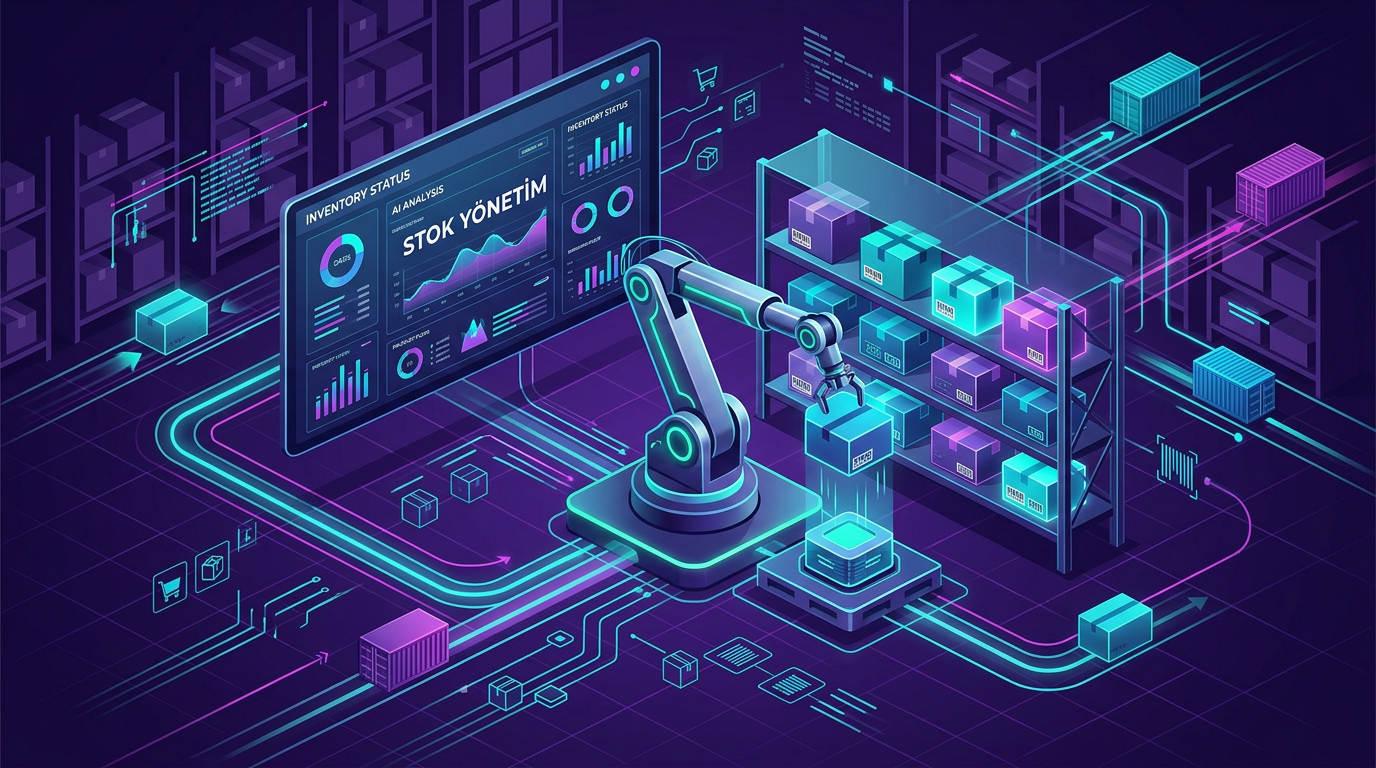
AI Stok Yonetim is an AI-powered inventory management system designed to optimize stock levels, forecast demand, and streamline supply chain operations. This solution integrates machine learning algorithms and data analytics to provide actionable insights and automate routine tasks, enabling retailers to make informed decisions and enhance operational efficiency.
Practical Implementation of AI Stok Yonetim
Implementing AI Stok Yonetim involves several key steps. Initially, data from various sources such as sales, supplier lead times, and market trends are gathered. This data is then processed through AI algorithms to identify patterns and predict future inventory needs.
Retailers can integrate AI Stok Yonetim with existing ERP systems to ensure seamless data flow and real-time visibility into inventory levels. The system continuously learns from new data, refining its predictions and adapting to changing market conditions, making it a dynamic tool for inventory management.
Business Value and Measurable Outcomes
AI Stok Yonetim delivers substantial business value by reducing overstock and stockouts, which are common challenges in inventory management. By accurately predicting demand, it helps retailers maintain optimal stock levels, reducing excess inventory costs and minimizing lost sales opportunities due to out-of-stock situations.
Furthermore, AI Stok Yonetim enhances decision-making by providing detailed insights into consumer buying patterns and market trends. Retailers can tailor their marketing strategies and optimize product offerings based on these insights, leading to increased customer satisfaction and higher profitability.
Risks and Mitigation Strategies
While AI Stok Yonetim offers numerous advantages, its implementation is not without risks. Data privacy and security concerns need to be addressed, as the system relies heavily on sensitive business data. Retailers must ensure robust security measures and compliance with data protection regulations to safeguard information.
Additionally, the effectiveness of AI Stok Yonetim is contingent on the quality of data inputs. Inaccurate or incomplete data can lead to erroneous predictions. Regular data audits and validation processes should be implemented to maintain data integrity and the reliability of AI outputs.
Optimizing Workflows with AI Stok Yonetim
AI Stok Yonetim optimizes inventory workflows by automating routine tasks such as order processing, inventory tracking, and replenishment ordering. This automation reduces manual errors and frees up human resources for more strategic activities, enhancing overall productivity.
The system also facilitates better collaboration between departments by providing a unified view of inventory data. This transparency ensures that marketing, sales, and supply chain teams are aligned and can make coordinated decisions, further optimizing business operations.
Key Performance Indicators (KPIs) for Success
To measure the success of AI Stok Yonetim, retailers should focus on specific KPIs such as inventory turnover rate, order accuracy, stockout percentage, and inventory holding costs. Monitoring these metrics provides insights into system performance and the impact on business outcomes.
Continuous improvement of these KPIs indicates effective inventory management and contributes to enhanced financial performance, customer satisfaction, and competitive advantage.
Examples of AI Stok Yonetim in Action
Several retailers have successfully implemented AI Stok Yonetim to revolutionize their inventory management processes. For instance, a leading fashion retailer reduced its stockout rates by 30% and improved inventory turnover by 20% within the first year of implementation. By leveraging AI-driven insights, the retailer optimized its supply chain and enhanced its ability to meet customer demands efficiently.
Another example involves a multinational electronics retailer that integrated AI Stok Yonetim with its ERP system. This integration facilitated real-time inventory tracking and automated reorder processes, resulting in a 15% reduction in inventory holding costs and a significant increase in order fulfillment speed.
Conclusion
AI Stok Yonetim is revolutionizing the retail industry by transforming inventory management processes. Its ability to harness the power of AI and data analytics provides retailers with the tools they need to optimize stock levels, reduce costs, and improve customer satisfaction. By addressing implementation risks and focusing on measurable outcomes, retailers can unlock the full potential of AI Stok Yonetim, gaining a significant competitive edge in the marketplace.
Integrating AI Stok Yonetim with Technological Ecosystems
Integrating AI Stok Yonetim into existing technological infrastructures can significantly amplify its benefits. By leveraging robust API integrations, retailers can ensure seamless data interchange between AI Stok Yonetim and other enterprise systems such as point-of-sale (POS) systems, customer relationship management (CRM) platforms, and warehouse management systems (WMS). This interconnectedness facilitates a holistic view of operational data, empowering businesses to optimize every aspect of their supply chain, from procurement to point of sale.
Enhancing Data Interoperability
One primary advantage of integration is enhanced data interoperability. When AI Stok Yonetim communicates with various systems, it can access a broader dataset, leading to more accurate demand forecasting and inventory optimization. Retailers can witness improvements in data-driven decision-making processes, ensuring inventory alignment with current and projected customer demand.
- Real-time Updates: Integrated systems enable real-time updates across platforms, ensuring inventory data is always current, which is crucial for maintaining stock accuracy and planning logistics.
- Automated Workflows: With seamless integration, workflows such as order processing and stock replenishment can be automated end-to-end, reducing manual intervention and improving efficiency.
Future Trends in AI-Driven Inventory Management
The future of AI-driven inventory management, spearheaded by solutions like AI Stok Yonetim, is poised to evolve with advancements in technology and shifting market dynamics. As AI technology progresses, so will its applications in inventory management, providing even greater value to retailers.
Adoption of AI and IoT
The integration of the Internet of Things (IoT) with AI Stok Yonetim is set to create more intelligent and responsive inventory systems. IoT devices can provide real-time data on stock levels, environmental conditions, and logistical parameters, feeding this data into AI systems to refine predictions and optimize stock management further.
- Smart Shelves: IoT-enabled smart shelves can automatically detect stock levels and trigger restocking alerts or orders, minimizing stockouts and overstock situations.
- Predictive Maintenance: IoT sensors can predict equipment failures in warehouses, allowing for preemptive maintenance and reducing downtime, which aids in maintaining efficient supply chain operations.
The Rise of Augmented Reality (AR)
As AR technology becomes more sophisticated, its integration with AI Stok Yonetim could transform inventory management practices. AR can be used for efficient inventory audits and stocktaking by overlaying information directly onto physical environments, streamlining traditionally labor-intensive processes.
Training and Skill Development for AI Stok Yonetim
For companies adopting AI Stok Yonetim, employee training and skill development are critical for maximizing system utility. Understanding how to interpret AI-generated insights and manage AI integrations becomes a valuable asset for workforce development.
Building AI Literacy
Investing in training programs that enhance AI literacy among employees can facilitate smoother transitions and better utilization of AI tools. This involves developing skills in data analysis, machine learning basics, and understanding AI ethics and governance.
- Workshops and Seminars: Conducting regular workshops and seminars to educate employees on the functionalities and benefits of AI Stok Yonetim encourages tech adoption and boosts confidence in AI-led initiatives.
- Cross-Departmental Training: Implementing cross-departmental training sessions ensures a unified understanding of the AI system, enabling cohesive teamwork and communication.
Evaluating AI Stok Yonetim's Return on Investment (ROI)
To determine the financial impact of AI Stok Yonetim, retailers must evaluate the system's return on investment. This involves comparing the costs of implementation and operation against the tangible benefits realized.
Quantifying Benefits
Retailers should track specific financial metrics related to inventory management improvements, such as:
- Cost Savings: Reduction in inventory holding costs and diminished loss due to stockouts or overstock situations contribute directly to increased ROI.
- Revenue Growth: Improved inventory accuracy and fulfillment rates can enhance customer satisfaction and repeat business, driving revenue growth.
By continuously analyzing these financial metrics, businesses can assess the long-term economic value of AI Stok Yonetim and make informed decisions about scaling its application across other operational areas.