
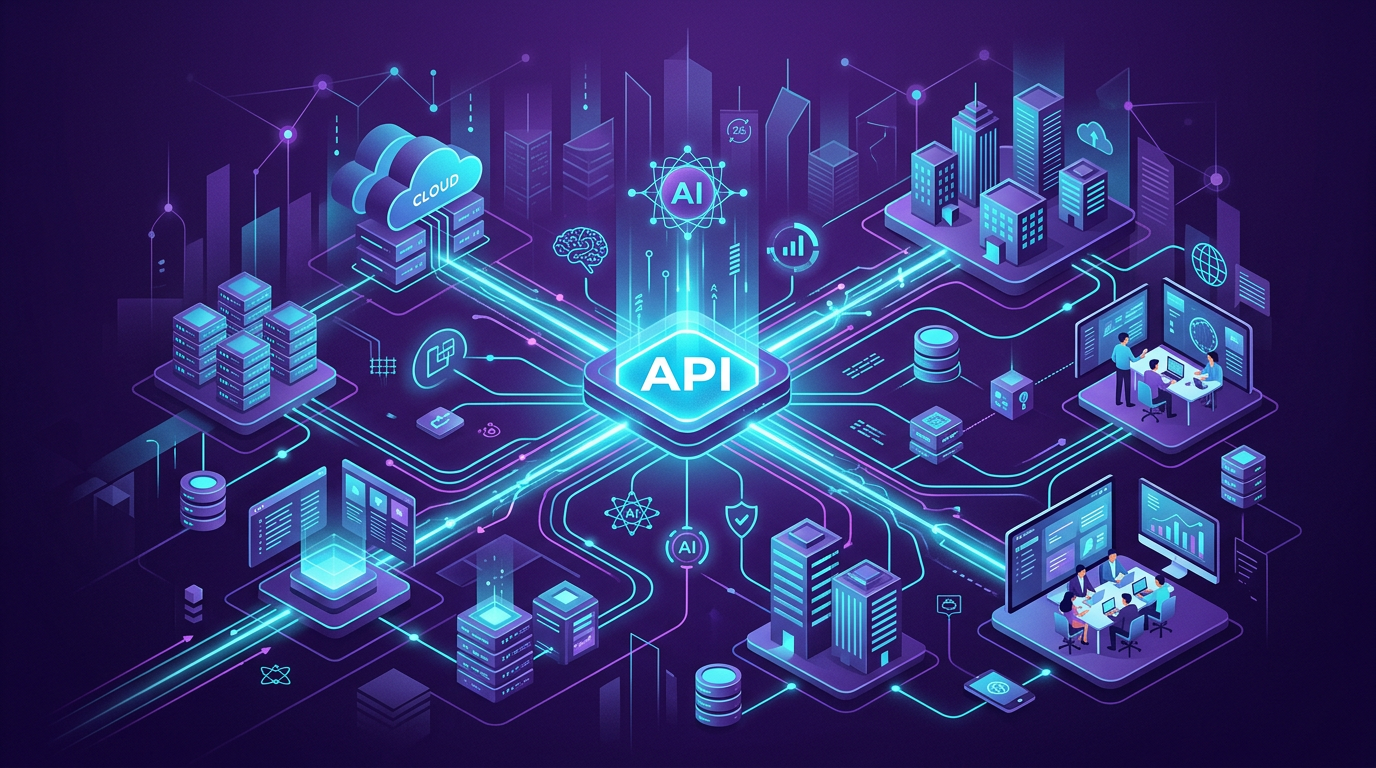
Introduction: The Need for AI API Integration
In today's fast-paced digital landscape, businesses are increasingly turning to artificial intelligence (AI) to streamline operations, enhance customer experiences, and drive innovation. As AI technologies evolve, the demand for seamless integration of AI solutions into existing business processes has surged. One of the most effective ways to achieve this integration is through AI Application Programming Interfaces (APIs). In this article, we will explore the significance of AI API integration for modern enterprises, covering practical implementation, business value, associated risks, workflows, key performance indicators (KPIs), and real-world examples.
Understanding AI API Integration
AI APIs serve as connectors that allow different software applications to communicate and share data seamlessly. They enable enterprises to incorporate AI capabilities into their systems without the need for extensive in-house development. By utilizing AI APIs, businesses can leverage advanced technologies such as natural language processing, computer vision, machine learning, and predictive analytics to enhance their products and services.
Practical Implementation: Steps and Best Practices
The journey to integrating AI APIs involves several steps, each requiring careful consideration and strategic planning. Here's a step-by-step guide to practical implementation:
- Identify Business Needs: Start by clearly defining the business problems that AI integration aims to solve. Whether it's customer service automation, data analysis, or personalized marketing, understanding the objectives is crucial.
- Choose the Right AI APIs: Not all AI APIs are created equal. Evaluate different API providers based on their features, ease of integration, scalability, and cost. Consider APIs that align with your business goals.
- Develop Integration Strategy: Create a detailed plan that outlines how the AI APIs will be integrated into existing systems. This plan should include timelines, resource allocation, and potential challenges.
- Test and Validate: Before full-scale deployment, conduct thorough testing to ensure the APIs function as expected. Validate the integration with real-world data to identify any issues.
- Deploy and Monitor: Once the APIs are integrated and tested, deploy them across the organization. Continuously monitor their performance and gather feedback to make necessary adjustments.
Business Value of AI API Integration
Integrating AI APIs into enterprise systems can deliver significant business value:
- Enhanced Efficiency: AI APIs automate repetitive tasks, freeing up human resources for more strategic activities. This leads to improved operational efficiency.
- Improved Customer Experience: Through AI-powered chatbots and personalization engines, companies can offer superior customer service and tailored experiences.
- Data-Driven Decision Making: AI APIs enable businesses to analyze large volumes of data quickly and accurately, providing insights that drive informed decision-making.
- Scalability: AI APIs offer scalable solutions that grow with the business, ensuring long-term sustainability and adaptability to market changes.
Risks and Challenges
While AI API integration offers numerous benefits, it also poses certain risks and challenges:
- Data Privacy and Security: Integrating AI APIs involves sharing data across platforms, which can raise security concerns. Ensuring robust data protection measures is essential.
- Integration Complexity: The complexity of integrating AI APIs with legacy systems can lead to technical challenges and require additional resources.
- Cost Implications: While AI APIs can reduce development costs, the initial investment for integration and ongoing maintenance must be carefully managed.
Workflows and Key Performance Indicators (KPIs)
To measure the success of AI API integration, businesses should establish clear workflows and KPIs:
- Workflow Automation Rate: Track the percentage of tasks automated through AI APIs to assess efficiency improvements.
- Customer Satisfaction Scores: Measure the impact of AI-enhanced services on customer experience through surveys and feedback.
- Data Processing Speed: Evaluate the speed at which AI APIs process data compared to manual methods.
- Return on Investment (ROI): Calculate the financial benefits gained from AI API integration relative to the costs incurred.
Real-World Examples
Several enterprises have successfully integrated AI APIs to drive business transformation:
Case Study 1: E-commerce Personalization
An online retailer implemented AI APIs to analyze customer behavior and preferences, enabling personalized product recommendations. This led to a 20% increase in sales and a 15% improvement in customer retention.
Case Study 2: Financial Fraud Detection
A financial institution deployed AI APIs for real-time fraud detection. The system reduced fraud-related losses by 30% while enhancing the accuracy of risk assessments.
Conclusion
AI API integration is a powerful tool for modern enterprises seeking to harness the full potential of AI technologies. By carefully planning and executing the integration process, businesses can achieve remarkable outcomes such as improved efficiency, enhanced customer experiences, and data-driven insights. However, it is crucial to address challenges related to data security, integration complexity, and costs. With the right approach, AI API solutions can deliver significant business value and pave the way for future innovation.
Evolving AI API Solutions: Future Trends
As industries continue to embrace AI API integration, several emerging trends are shaping the future landscape. These trends offer new opportunities and challenges for enterprises aiming to stay competitive in a rapidly evolving digital environment.
Trend 1: API Ecosystem Expansion
The expansion of API ecosystems is set to revolutionize how businesses adopt AI solutions. Companies are increasingly partnering with API providers to create robust networks that offer comprehensive capabilities. This collaboration allows businesses to access a diverse range of AI functionalities without developing them in-house, fostering innovation and agility.
Trend 2: Hyper-Personalization
With advancements in AI, hyper-personalization is becoming a reality. AI APIs are enabling businesses to analyze customer data in real-time, allowing for dynamic personalization of products, services, and marketing efforts. This trend is driving higher customer engagement and loyalty by offering unique, tailored experiences.
Trend 3: AI-Powered Automation
The automation of complex business processes through AI APIs is set to increase. Enterprises are leveraging AI to automate tasks beyond routine activities, such as predictive maintenance in manufacturing and autonomous financial analysis. This shift is expected to significantly enhance productivity and operational efficiency.
Industry-Specific Implementations
AI API integration is gaining traction across various industries, each leveraging the technology to meet unique challenges and opportunities.
Healthcare
In the healthcare sector, AI APIs are transforming patient care and administrative operations. From automating diagnostic processes to personalizing treatment plans, the integration of AI APIs is enhancing healthcare delivery while reducing costs.
- Example: AI-based diagnostic APIs are being used to analyze medical images, aiding radiologists in early disease detection with increased accuracy.
Retail
Retailers are utilizing AI APIs to optimize inventory management and enhance customer experiences. Predictive analytics APIs forecast demand trends, ensuring optimal stock levels and reducing wastage.
- Example: A major retail chain implemented AI APIs to analyze foot traffic data, leading to a 25% improvement in inventory allocation and 30% reduction in stockouts.
Finance
In the finance industry, AI APIs are streamlining operations and improving security. APIs are used for real-time data analysis, fraud detection, and customer service automation.
- Example: A leading bank utilizes AI APIs to analyze transaction patterns, enhancing fraud detection capabilities and improving customer trust.
Strategies for Successful AI API Integration
To leverage the full potential of AI API solutions, enterprises should adopt effective strategies that promote seamless integration and sustainable growth.
Strategy 1: Cross-Departmental Collaboration
Successful AI API integration requires collaboration between IT, operations, and business units. By fostering cross-departmental communication and understanding, businesses can ensure that AI solutions align with organizational objectives and deliver maximum value.
Strategy 2: Continuous Learning and Adaptation
AI technologies and market dynamics are continuously evolving. Businesses must adopt a culture of continuous learning and adaptation to stay ahead. This includes regularly updating AI strategies and investing in employee training to maximize the benefits of AI API integration.
Strategy 3: Robust Data Management Practices
Data is the backbone of AI API solutions. Implementing robust data management practices ensures data quality and security, enabling accurate AI-driven insights. Businesses should invest in data governance frameworks and utilize advanced data analytics tools.
Conclusion: Paving the Way for Innovation
AI API solutions are revolutionizing the way modern enterprises operate, offering opportunities for innovation, efficiency, and customer satisfaction. By understanding the practical aspects of AI API integration, embracing future trends, and adopting effective strategies, businesses can harness the transformative power of AI to achieve long-term success and maintain a competitive edge in the market.